Motorcycles, Mysticism

Harleys, Druids, and the Atlantean Tradition

WildH

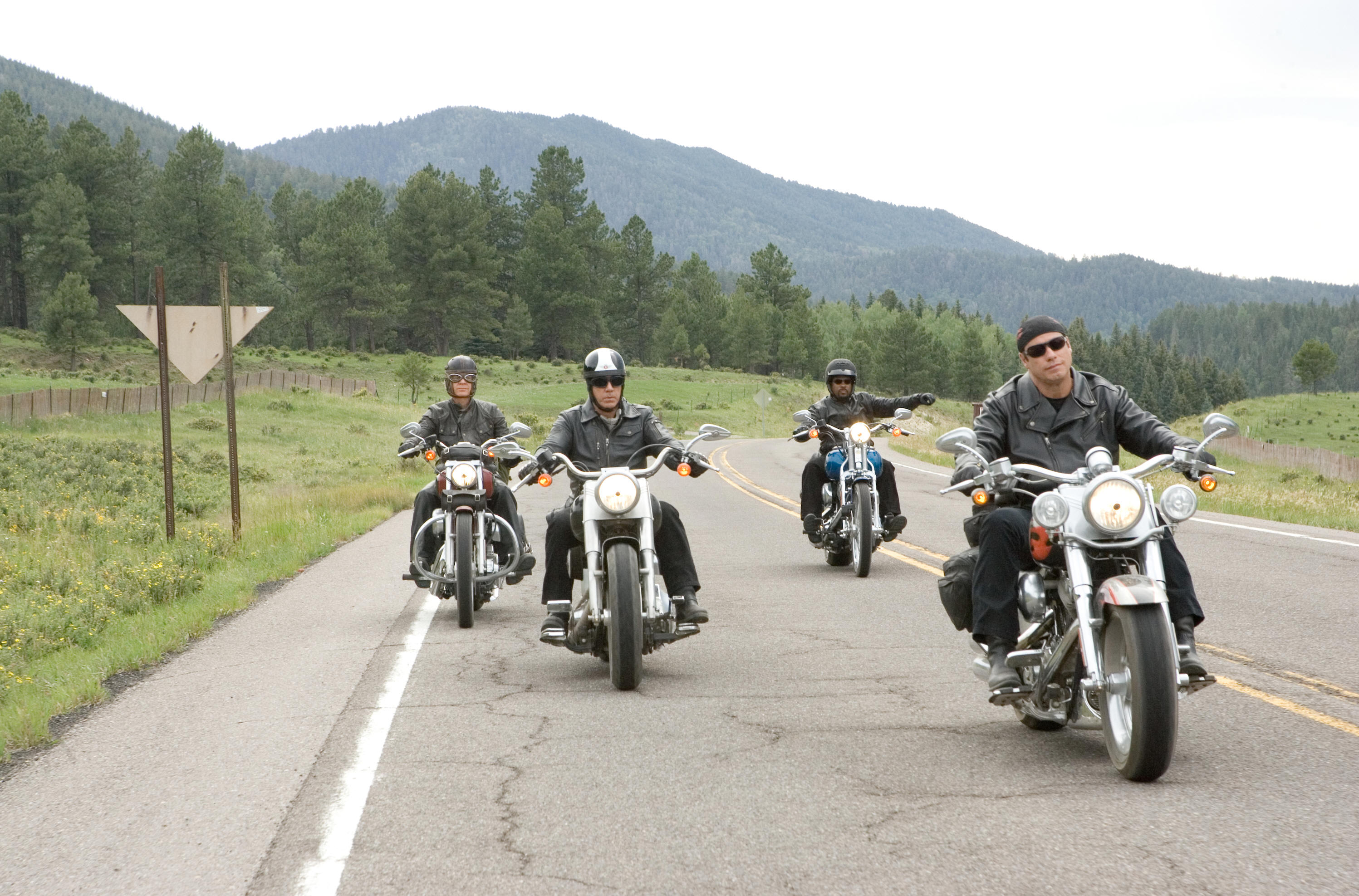
Has it ever been your misfortune to see the rather inane 2007 movie “Wild Hogs”?

WildHogs_TA003

They say that the origin of the popular nickname “hog” goes all the way back to 1920, when a team of farm boys — who became known as the “hog boys” — consistently won motorcycle races. The team’s mascot was a live hog, which they would take for a victory lap on their Harley-Davidson following a win —

Ray_weishaar_pig_on_bike

It is said that team member Ray Weishaar was the man most responsible for popularising the little hog. Apparently, he was particularly fond of it —

Ray_weishaar_hog

Ray_weishaar_hog_beer

Some 60 years later, the Harley-Davidson Motor Company came up with a way to cash in on the informal tradition, by creating a factory-sponsored community marketing club and calling it “HOG” — the Harley Owners Group.  The company has even tried to trademark the word “hog” — unsuccessfully.

But let us set aside for a moment the cynical, the degenerate, and the inane use of symbolism in pursuit of corporate profit.

Could there be a deeper, ancient, mystical, and sacred significance to the modern association of the word “hog” with a mode of transport, of movement with rest, that so many — myself included — find to be, at least at times, an almost “spiritual” experience?

Here’s René Guénon with The Symbols of Sacred Science, and a brief excerpt from the chapter titled “The Wild Boar and the Bear” (plus, some fascinating facts on the ancestry of the Motor Company’s founders, at the end) —

Among the Celts the wild boar and the bear symbolised, respectively, the representatives of spiritual authority and temporal power, that is, the two castes of Druids and Knights, the equivalents, at least originally and in their essential attributes, of the Brahmins and Kshatriyas in India. As we have indicated elsewhere, this clearly Hyperborean symbolism is one of the marks of the direct connection of the Celtic tradition to the Primordial Tradition of the present Mahā-Yuga, whatever other elements, from earlier but already secondary and derivative traditions, may have come to be added to this main current and to be, as it were, reabsorbed into it. The point to be made here is that the Celtic tradition could probably be regarded as truly constituting one of the ‘links’ between the Atlantean tradition and the Hyperborean tradition, after the end of the secondary period when this Atlantean tradition represented the predominant form and, as it were, the ‘substitute’ for the original centre which was already inaccessible to the bulk of humanity. On this point also, the symbolism just mentioned can provide some information that is not without interest.

Let us note first the equal importance given the wild boar by the Hindu tradition, which is itself the direct issue of the Primordial Tradition and which expressly affirms its own Hyperborean origin in the Veda. The wild boar (varāha) not only figures as the third of the ten avataras of Vishnu in the present Mahā-Yuga, but our entire Kalpa, that is to say, the entire cycle of manifestation of our world is designated in the tradition as the Shwetavarāha Kalpa, the ‘cycle of the white wild boar’. This being so, and considering the analogy which necessarily exists between the great cycle and subordinate cycles, it is natural that the mark of the Kalpa, so to speak, should be found once more at the outset of the Mahā-Yuga; and this is why the polar ‘sacred land’, seat of the primordial spiritual centre of this Mahā-Yuga, is also called Vārāhi or the ‘land of the wild boar’. Moreover, since it is there that the first spiritual authority resided, from which all other authority of the same order is only an emanation, it is no less natural that the representatives of such an authority should also have received the symbol of the wild boar as their distinctive mark and that they should have retained it during the times that followed. This is why the Druids designated themselves as ‘wild boars’ even though, since symbolism always has multiple aspects, we may well have here at the same time an allusion to the isolation in which they kept themselves with respect to the outside world, the wild boar having always been thought of as ‘solitary’. It must be added, furthermore, that this very isolation, which took the form, with the Celts as with the Hindus, of a forest retreat, is not unrelated to the characteristics of ‘primordiality’, of which some reflection at least has always had to be maintained in all spiritual authority worthy of the function it fulfills.

image1full

As one who has Celtic ancestry, and who has taken to a solitary life, finding this preferred isolation most often by riding “at one” with a “wild hog”, or travelling by motorcycle to a favourite forest retreat, naturally, I find Guénon’s research to be not without great personal significance.

I do wonder at the degenerate state of spirituality in our world today, when considering the many who prefer to ride in packs, rather than alone.
0000641_indian-larry-no-club-lone-wolf-patch

It is interesting to note the ancestral origin of the founders of the Harley-Davidson Motor Company — William S. Harley, and the Davidson brothers.

The ancestors of the name Harley date back to the Anglo-Saxon tribes of Britain. The name is derived from their residence in Harley, a place-name found in Shropshire and in the West Riding of Yorkshire. The place-name is derived from the old english words hare, which meant hare or rabbit, and leah, which meant forest clearing. The name as a whole meant “clearing with lots of rabbits”. The original bearers of the name lived in or near such a clearing.

HouseofNames.com

Shropshire. Celtic and Druid central, in the Iron Age.

Think blacksmiths.

Think too, of another popular nickname for Harley’s — “iron horse”.

And the name Davidson (“David’s son”)?

Arthur Davidson, Sr. (c. 1881–1950, Milwaukee, Wisconsin) was one of the four original founders of Harley-Davidson. His father William C Davidson, son of a blacksmith who owned a smithy in Netherton, Scotland, had emigrated to the United States around the year 1857…

— Wikipedia

First found in Perth, Scotland, where, in 1219, Johannus filius Davidis, a merchant in Perth, is mentioned. Some accounts suggest that around 1000 AD the Catti (Chattan) Clan, from whom the Davidson Clan descends, broke into two distinct factions, the MacKintosh and the MacPherson Clans. The Davidson Clan was part of the MacPherson element, but always considered itself to be the senior clan of the Chattan group… Bearers of Davidson were found on both sides of the Scottish-English border.

HouseofNames.com

 Again, Celtic central in the Iron Age.

All this a series of mere “coincidences”, of course.

Standard
General

Was it something I said?

harley-davidson-softail-springer-1995-bad-boy-FXSTSB-evolution-1340-thunderheader-carlini-evil-apehangers-cycle-vision-tall-sissybar-joker-machine-mirrors-psalmistice_CIMG2301

Remarkable.

Today, my small business received more in customer purchases than in most full weeks of the past few years.

In one day.

Completely, spontaneously, astonishingly counter trend.

And with new, unexpectedly large bills to pay by month’s end, a tremendous, timely blessing.

Thank You.

harley-davidson-softail-springer-1995-bad-boy-FXSTSB-evolution-1340-thunderheader-carlini-evil-apehangers-cycle-vision-tall-sissybar-joker-machine-mirrors-psalmistice_CIMG2309


Standard
General

A kindred spirit

BqEsgAUCIAAM7AX

Woman after my own heart.

A picture of Psalmistice.

She even got the colours right.

Courtesy @AmazeIdeas on Twitter

Standard
Mysticism

God is in the gaps

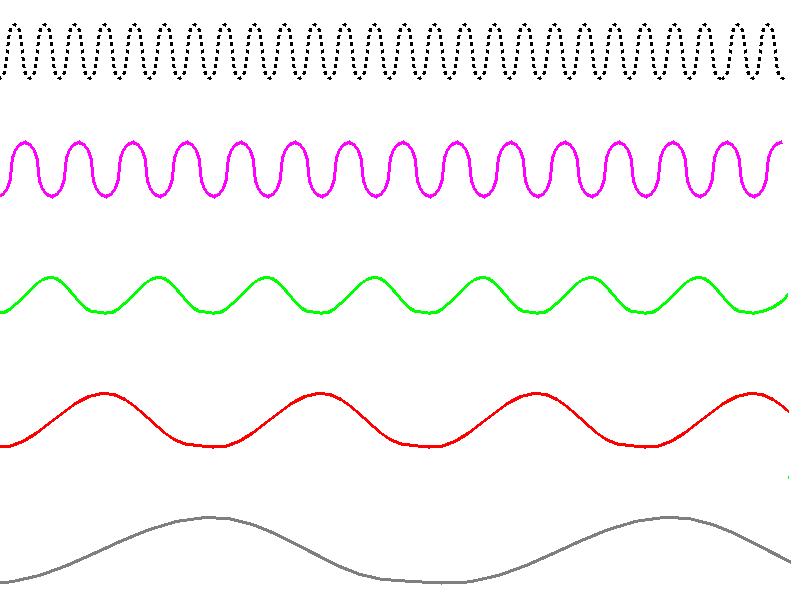
Take a moment. Breathe slowly.

Look carefully, at each of these waves.

These vibrations.

These “fluctuations in the quantum vacuum” some call “matter”.

Which one gives you the greatest feeling of Peace?


em_waves


Where do you think God — pure, perfect Peace — might be?


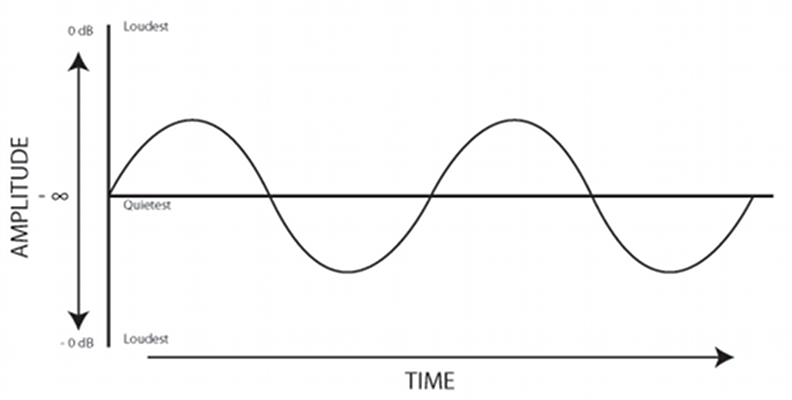
amplitude_frequency


God is in the gaps.


sound-wave-amplitude


He is the No-thing, in which All things appear.

Are you listening?

Standard
General

I give you

“She was here on earth to grasp the meaning of its wild enchantment and to call each thing by its right name, or,
if this were not within her power, to give birth out of love for life to successors who would do it in her place.”

— Boris Pasternak, Dr Zhivago

 
Can you imagine how our world might change.

If we called each thing by its right name.

Imagine if we ceased to say,

“I love you”.

And called this thing by its right name.

Today.

Look your beloved in the eye.

Do not say,

“I love you”.

Say instead,

“I give you”.

“I yield you”.

Would those words be true for you?

When. What. Why.

Do you give?

Why. What. When.

Do you yield?

Would it be more honest of you to say,

“I take you”.

“I resist you”.

Be sure.

To call each thing by its right name.

Standard

revit-mohawk-boot-redwing-875-moccasin-toe-topsider-steve-mcqueen-877-urban-motorcycle-cafe-racer-hipster-pullup-leather-psalmistice_CIMG2275

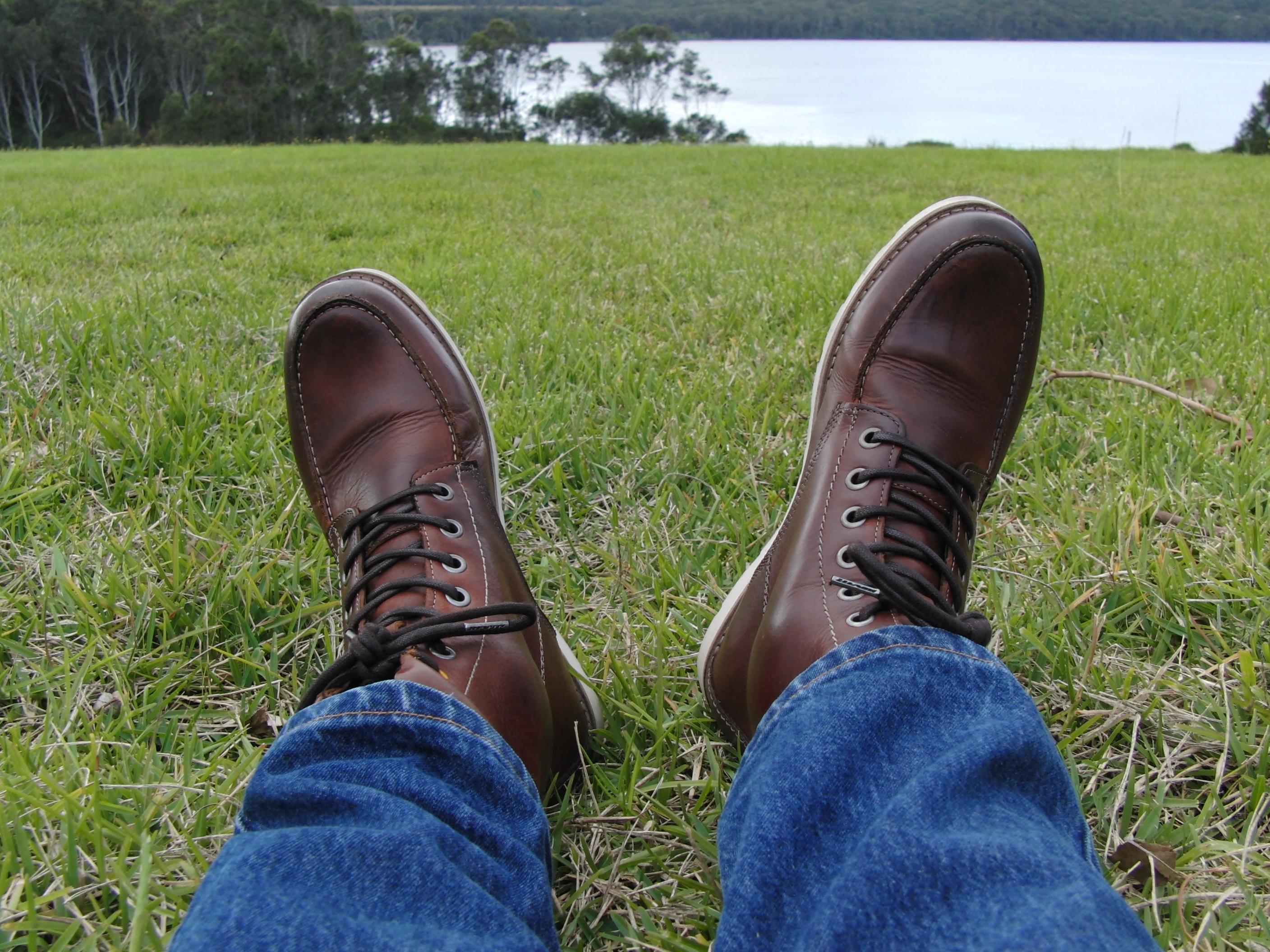
REV’IT! Mohawk.

The “all around” motorcycle boot that God might create.

Beauty. Comfort. Protection.

Strong. Light. Enduring.

Traditional. Practical. Amenable.

revit-mohawk-boot-redwing-875-moccasin-toe-topsider-steve-mcqueen-877-urban-motorcycle-cafe-racer-hipster-pullup-leather-psalmistice_CIMG2249

revit-mohawk-boot-redwing-875-moccasin-toe-topsider-steve-mcqueen-877-urban-motorcycle-cafe-racer-hipster-pullup-leather-psalmistice_CIMG2250

revit-mohawk-boot-redwing-875-moccasin-toe-topsider-steve-mcqueen-877-urban-motorcycle-cafe-racer-hipster-pullup-leather-psalmistice_CIMG2236

revit-mohawk-boot-redwing-875-moccasin-toe-topsider-steve-mcqueen-877-urban-motorcycle-cafe-racer-hipster-pullup-leather-psalmistice_CIMG2238

revit-mohawk-boot-redwing-875-moccasin-toe-topsider-steve-mcqueen-877-urban-motorcycle-cafe-racer-hipster-pullup-leather-psalmistice_CIMG2273

revit-mohawk-boot-redwing-875-moccasin-toe-topsider-steve-mcqueen-877-urban-motorcycle-cafe-racer-hipster-pullup-leather-psalmistice_CIMG2285

revit-mohawk-boot-redwing-875-moccasin-toe-topsider-steve-mcqueen-877-urban-motorcycle-cafe-racer-hipster-pullup-leather-psalmistice_CIMG2266

revit-mohawk-boot-redwing-875-moccasin-toe-topsider-steve-mcqueen-877-urban-motorcycle-cafe-racer-hipster-pullup-leather-psalmistice_CIMG2259

revit-mohawk-boot-redwing-875-moccasin-toe-topsider-steve-mcqueen-877-urban-motorcycle-cafe-racer-hipster-pullup-leather-psalmistice_CIMG2290

Thank you Gebrandt Aarts.

For the product of your inspiration.

REV'IT! REVzine Issue 10, Spring/Summer 2014, page 60

REV’IT! REVzine Issue 10, Spring/Summer 2014, page 60

General

Movement with rest

This beautiful White-Bellied Sea Eagle visited me by the lake today. Circling directly overhead, before soaring away.

If they ask you:
What is the sign of the Father in you?
Say to them:
It is movement with rest.

– Jesus of Nazareth, Gospel of Thomas, Logion 50

Standard
Motorcycles, Mysticism

The language of the birds

CIMG2263

I enjoyed another visitation today. Another close encounter.

This bird, unlike the last (‘An extraordinary gathering of angels’), had something to say —

My persistently vocal visitor reminded me to return here to an unfinished theme: a book that I am reading, Symbols of Sacred Science. A chapter titled ‘The Language of the Birds’. And, most importantly, the subject of rhythm.

This book has inspired me with many thoughts, and understandings. New insights, about this blog. About its titular portmanteau — “Psalmistice”. The symbolisms embedded in its winged logo. And, most profoundly, about my intuitions regarding the (dare I say) spiritual aspect of the silence I hear beneath the beat of a V-twin Harley-Davidson engine.

But not just any H-D engine. Only the old, pre- “noughties” engine.

When I first began searching for a Harley-Davidson, I rode a number of new, and recent models. All, I found to be lacking something. An indefinable something. But within moments of my first experiencing an old, pre-2000, rigid mount, 80 cubic inch Evolution engine, I knew.

This, was it.

The right feeling.

Rhythm.

Character.

Life.

Felt clearly, through each touchpoint with the machine.

Hands.

Feet.

Seat.

Not a vague shaking; that isolated, strangely separated, exaggerated rocking motion, as with a newer rubber mount. Not smooth, bland, sterile, lifeless, as with a newer “counter-balanced” rigid mount.

Pulsing.

Massaging.

Giving.

Living.

And so it came to be, that after a long search abroad, I was blessed to acquire a 1995 model collector’s machine, with just 340 miles (544 kilometers) having caressed the circumference of its tyres.

The 6,500 kilometers travelled since have presented countless hours of opportunity for observation, and contemplation. A recurring theme, I must confess, is that, whatever human product befalls my eye — whether it be motorcycles, motor cars, bicycles, lawnmowers, houses, household appliances, children’s toys, public buildings — the truth of the matter is this.

“They just don’t make them like they used to”.

Look around you. Consider carefully, the things our hands … or perhaps, ever-more commonly, a robot’s hands … have made.

Glitzy.

Shiny.

“Edgy”.

Gadgety.

Plasticky.

Quickly.

Increasingly lacking solidity.

Not to mention … simplicity.

Superficial.

Skin deep.

Insubstantial.

One cracked dab of glue, one failed diode away from redundancy. And relegation to landfill.

But what I have noticed most of all, is the growing absence of character. Real, authentic character.

Soul.

For some time now, it has been my ever-firming belief that mankind’s inner condition is, more often than not, reflected in the work of his hands.

As within, so without.

Just as (to cite the topical example) the Harley-Davidson Motor Company’s products have steadily declined in simplicity, solidity, reliability, longevity, originality, authenticity, and above all, soul, and all this most notably since the turn of the millennium, so too, I perceive the steady degeneration of the West’s moral condition. Indeed, so much so, with the passing of years, that I can hardly … rarely … bring myself to look at a television. At the gym, I keep my motorcycle earplugs in, to block out the music videos’ arrogant, swaggering, tempting, beckoning, shimmying, serpentine, slithering, haughty, angry din.

What is on TV?

Violence. Narcissism. Depravity. Injury. Sophistry. Flattery. Revelry. Superficiality. Irresponsibility. Momentary. Temporary. Greedy.

Loud.

Lifeless.

Soulless.

Charging, raging, with pounding rhythms, competing, but strangely lacking, something.

Depth.

Height.

Substance.

Resonance.

Harmony.


Please do not from all this think that my weltanschauung is bleak. Au contraire, I see darts of light reflecting everywhere. Shining all the brighter, by reason of growing darkness.

All this, by way of preamble, may now help you to see why it is that René Guénon’s ‘Language of the Birds’ resonated with me —

Likewise it is said in the Hindu tradition that the Devas [angels], in their fight against the Asuras [demons], protect themselves (achhandayan) by the recitation of the hymns of the Veda, and that it is for this reason that the hymns received the name of chhandas, a word which denotes ‘rhythm‘.  The same idea is contained in the word dhikr which, in Islamic esoterism, is used of rhythmic formulas that correspond exactly to Hindu mantras.  The repetition of these formulas aims at producing a harmonisation of the different elements of the being, and at causing vibrations which, by their repercussions throughout the immense hierarchy of states, are capable of opening up a communication with the higher states, which in a general way is the essential and primordial purpose of all rites.

This brings us back directly and very nearly to what was said above about the ‘language of the birds’, which we can also call ‘angelic language’, and of which the image in the human world is rhythmic speech: for the ‘science of rhythm‘, which admits of many applications, is the ultimate basis of all the means that can be brought into action in order to enter into communication with the higher states.  That is why an Islamic tradition says that Adam, in the earthly paradise, spoke in verse, that is, in rhythmic speech; this is related to that ‘Syrian language’ (lughah suryaniyyyah) of which we spoke in our previous study on the ‘science of letters’, and which must be regarded as translating directly the ‘solar and angelic illumination’ as this manifests itself in the centre of the human state.  This is also why the Sacred Books are written in rhythmic language which, clearly, makes them something quite other than mere ‘poems’, in the purely profane sense, which the anti-traditional bias of the modern critics would have them to be.  Moreover, in its origins poetry was by no means the vain ‘literature’ that it has become by a degeneration resulting from the downward march of the human cycle, and it had a truly sacred character.8 Traces of this can be found up to classical antiquity in the West, when poetry was still called the ‘language of the Gods’, an expression equivalent to those we have indicated, in as much as the Gods, that is, the Devas,9 are, like the angels, the representation of the higher states. In Latin, verses were called carmina, a designation relating to their use in the accomplishment of rites; for the word carmen is identical to the Sanskrit karma which must be taken here in its special sense of ‘ritual action’;10 and the poet himself, interpreter of the ‘sacred language’ through which the divine Word appears, was vates, a word which defined him as endowed with an inspiration that was in some way prophetic. Later, by another degeneration, the vates was no longer anything more than a common ‘diviner’,11 and the carmen (whence the English word ‘charm’) no more than a ‘spell’, that is, an operation of low magic. There again is an example of the fact that magic, even sorcery, is what subsists as the last vestige of vanished traditions.

These few indications should be enough to show how inept it is to mock at stories that speak of the ‘language of the birds’. It is all too easy and too simple to disdain as superstitious everything that one does not understand. But the ancients, for their part, knew very well what they meant when they used symbolic language. The real ‘superstition’, in the strictly etymological sense (quod superstat), is that which outlives itself, in short, the ‘dead letter’. But even this very survival, however lacking in interest it may seem, is nevertheless not so contemptible; for the Spirit, which ‘bloweth where it listeth’ and when it listeth, can always come and revivify symbols and rites, and restore to them, along with their lost meaning, the plenitude of their original virtue.


8 It can be said, moreover, in a general way, that the arts and sciences have become profane by just this kind of degeneration which deprives them of their traditional nature and, by way of consequence, of any higher significance. We have spoken of this in L’Esoterisme de Dante, ch. 2, and The Crisis of the Modern World, ch. 4 (see also The Reign of Quantity and the Signs of the Times, ch. 8)

9 The Sanskrit Deva and the Latin deus are one and the same word.

10 The word poetry also derives from the Latin poiein which has the same signification as the Sanskrit word kri, whence comes karma, which is found again in the Latin creare understood in its primitive acceptation; at the beginning, therefore, it was a question of something altogether different from a mere artistic or literary production in the profane sense that Aristotle seems to have had uniquely in view in speaking of what he called the ‘poetic sciences’.

11 The word ‘diviner’ itself is no less deviant from its meaning; for etymologically it is nothing else than divinus, signifying here ‘interpreter of the Gods’. The ‘auspices’ (from aves spicere, ‘to observe the birds’), omens drawn from the flight and song of birds, are most closely related to the ‘language of birds’, understood in this case in the most literal sense but nevertheless still identified with the ‘language of the Gods’, who were thought to manifest their will by means of these omens. The birds thus played the part of ‘messengers’, analogous — but on a very low plane — to the part that is generally attributed to the angels (whence their name, for this is precisely the meaning of the Greek aggelos).

And so it is with my personal experience, and more particularly, my deeper intuition, of what it is that truly lies beneath the extraordinary “legend” of the Harley-Davidson motorcycle. Heard, felt, only by those with “an ear to hear”.

A rhythm, a pulse, a vibration, resonating through the body, calming the spirit, vivifying the soul, opening a door to communication with “higher” states of being; a particular rhythm which can now only be found in the “old-fashioned”, “under-powered” vibrations of a simple engine design rendered “obsolete” by the “sophisticated” glories of modernity.

That is to say, by the simple greed of accountants, lawyers, bureaucrats, executives, and shareholders.

Simplicity is the ultimate sophistication.

— Leonardo da Vinci


Standard
General

Just breathe

It is interesting how often we receive in-sight when our eyes are still closed. While we are still floating in, rising from, the fog of awakening.

This morning I came ever so slowly awake in a simple picture of the nature of our existence. Indeed, just a picture of Nature itself.

The fundamental nature of Nature, this picture portrayed, is to be still, and breathe.

Consider a tree. How slowly it breathes. How still it stands.

Consider too, the grass, the plants; every living thing that has its roots in the dust of the earth.

And what of the great oceans, inspiring their own essence, and expiring it again, without ceasing; often restless at their surface, yes, but calm beneath; and standing still within their bounds.

Consider the animals. They too stand still, or, move only leisurely. Unless they are excited, or afraid.

Even the birds you see flying across the sky — like the ducks I watched earlier, wings beating rapidly as they whistled off to test the waters in a neighbour’s dam — only move according to their nature.

Some, by design, fly with slow and lazy beats. Or, at times, with no beating at all.

Others beat more rapidly, as that is their nature.

And yet, even the hummingbird beats its wings at its natural pace.

Indeed most rapidly, only in order to stand still.


Be still, and know that I AM God.

Psalm 46:10

Standard
General

The physics of True Love

Everything moved is moved not in something moved, but in something at rest.

— Hermes Trismegistus, Corpus Hermeticum, 2.6


Love, or giving, is the principal ordering principle of the universe.

How so?

All physical matter — the atoms and molecules, the building blocks of the universe — is “constructed” of waves.

All known waves, are simple motion. Motion that is described as being in, of, or through, a medium.

The medium, when at rest — which is rest — represents potentiality.

Potentiality becomes actuality, only when the potential yields. Or gives. Of its-self. Of its essence.

It is evident then, that the Principal principle of the universe, is Perfect Love.

Perfect Giving.

Giving out.

Giving in.

Giving up.

Of one’s self.

The one who truly loves, gives.

The one who truly loves — in the moment, in the actualisation of True Love — neither needs, nor desires, to take.

For in being Oned with that Infinite Potentiality, (s)he senses, becomes aware, of a great truth.

That (s)he has no needs, and no desires.

For (s)he already possesses — in oneness, with Infinite Potential — every thing.

(S)he is content.

It is from real-eyes-ation of this True Contentment — an Infinite Content-ment — that the potential for Infinite Giving is made actual.


If you consider the matter carefully:
rest is oneness which enfolds motion,
and motion is rest ordered serially.
Hence, motion is the unfolding of rest.

— Nicholas of Cusa, De Docta Ignorantia, 1440

Standard